

Your cooling pumps are burning fuel for conditions they almost never meet.
EnerGuard regulates SW and LT pump speed based on actual load, instead of running at 100% for an extreme scenario rarely seen in service.
Here's what EnerGuard would change for you
Concrete example: a 30 kW pump running year-round (8,760 h/yr) at about 50% of its speed.
Sized for the extreme, run every day
SW/LT pumps are sized for the worst case: 100% MCR at 32°C seawater, a classification society requirement. In practice these conditions are rare: in the Gulf of St. Lawrence seawater runs closer to 5–7°C (Statistics Canada, 2025), and average at-sea engine load is 40–60% of MCR (IMO, 2020).
"A significant share of operating time occurs at low load (<25% MCR), up to 52% of the time for container ships."
International Council on Clean Transportation (ICCT), 2024| Area | Winter | Spring | Summer | Fall |
|---|---|---|---|---|
| Gulf and estuary of the St. Lawrence | ||||
| Quebec | 1.8 °C | 3.1 °C | 12.6 °C | 9.2 °C |
| Rimouski | -0.7 °C | 2.5 °C | 11.6 °C | 5.6 °C |
| Baie-Comeau | -0.7 °C | 2.1 °C | 10.7 °C | 5.4 °C |
| Sept-Îles | -0.5 °C | 1.0 °C | 12.1 °C | 6.6 °C |
| Gaspé | -0.2 °C | 1.1 °C | 13.0 °C | 7.8 °C |
| Great Lakes | ||||
| Lake Superior | 2.0 °C | 4.0 °C | 15.7 °C | 11.7 °C |
| Lake Michigan | 3.7 °C | 6.0 °C | 19.0 °C | 14.3 °C |
| Lake Huron | 5.0 °C | 9.7 °C | 19.7 °C | 13.0 °C |
| Lake Erie | 4.0 °C | 8.7 °C | 22.3 °C | 16.3 °C |
| Lake Ontario | 3.7 °C | 7.0 °C | 20.3 °C | 15.0 °C |
Dynamic regulation, not a bigger pump
EnerGuard adjusts pump speed via VFDs, based on actual thermal load rather than the worst-case design scenario.
Sense
Seawater temperature, engine load and actual thermal demand, tracked continuously.
Compute
The interface determines the minimum required speed, with a conservative safety margin.
VFD control
The drive adjusts speed continuously; power follows the affinity law (P ∝ V³).
Traceability
Speed, running hours and temperatures logged to validate savings.
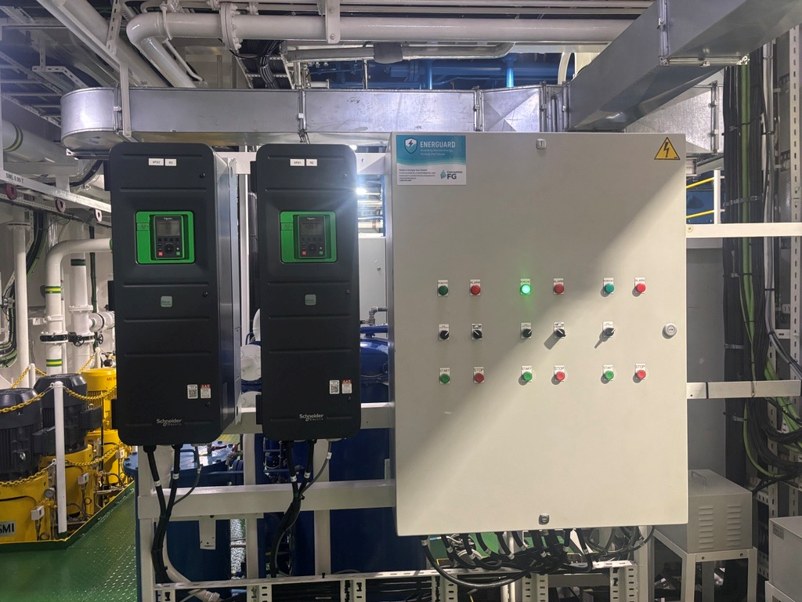
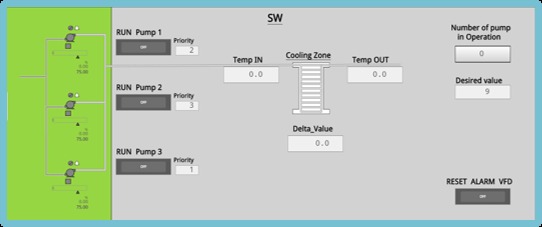
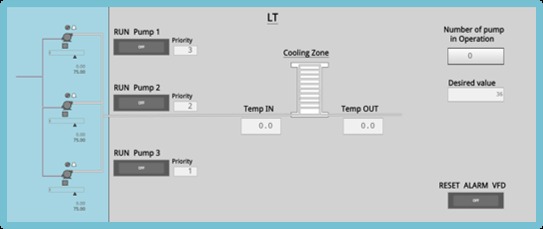
The system, as installed on board
Control cabinet and supervision interface from an EnerGuard project in operation.

A voluntary improvement, beyond requirements
Beyond regulation
No IMO rule, classification society (ABS, DNV, LR, BV) or Canadian requirement mandates VFDs on cooling pumps.
Specialized marine engineering
Electrical integration, network compatibility validation, and thermal/vibration management in a marine environment.
Beyond standard practice
Dynamic VFD modulation of SW/LT pumps: not yet common practice across the Québec merchant fleet.
Demonstrated cost effectiveness
Estimated cost of $38/tonne of CO₂ avoided, based on the 30 kW reference case.
A partner, not just a supplier
Beyond the technology itself, a few things that make a difference in how we support you.
A single point of contact
Conception FG designs, installs and monitors the system. One partner supports you from start to finish, rather than an equipment supplier alone or a generalist integrator.
Funding support
Our team can support you through grant applications for marine decarbonization, removing a real barrier to investment.
A self-serve calculator
Unlike most suppliers, we let you enter your own numbers and see an immediate estimate in the interactive calculator, a sign of confidence in our calculation methods.
Data traceability
Speed, operating hours and temperatures are logged continuously, a useful asset for GHG reporting to your clients or regulators.
How much could you save?
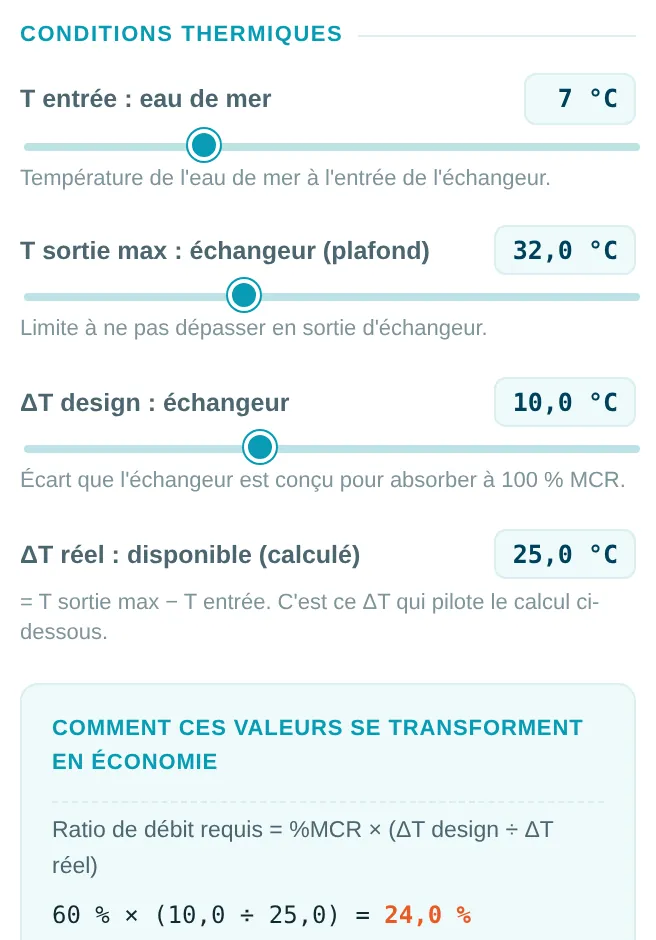
Adjust the sliders for a first order of magnitude, calculated with the same method as our full calculator.
Simplified estimate based on default assumptions (50 % minimum speed, 10 °C design ΔT, 7 °C seawater inlet, 15 % safety margin). For a result tailored to your vessel, with pessimistic, realistic and optimistic scenarios, use the full calculator.
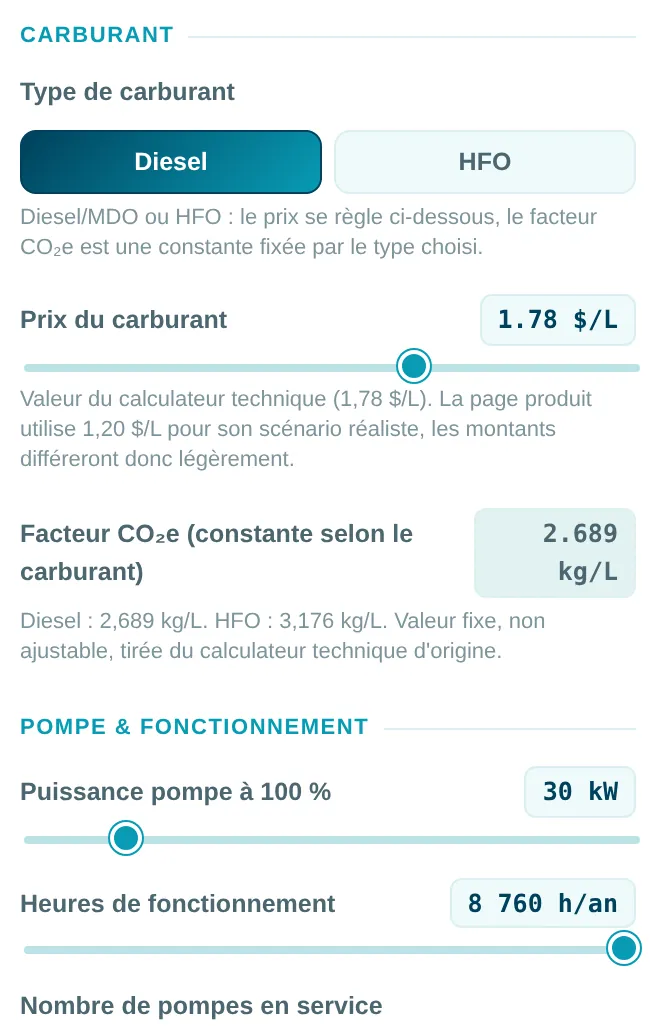
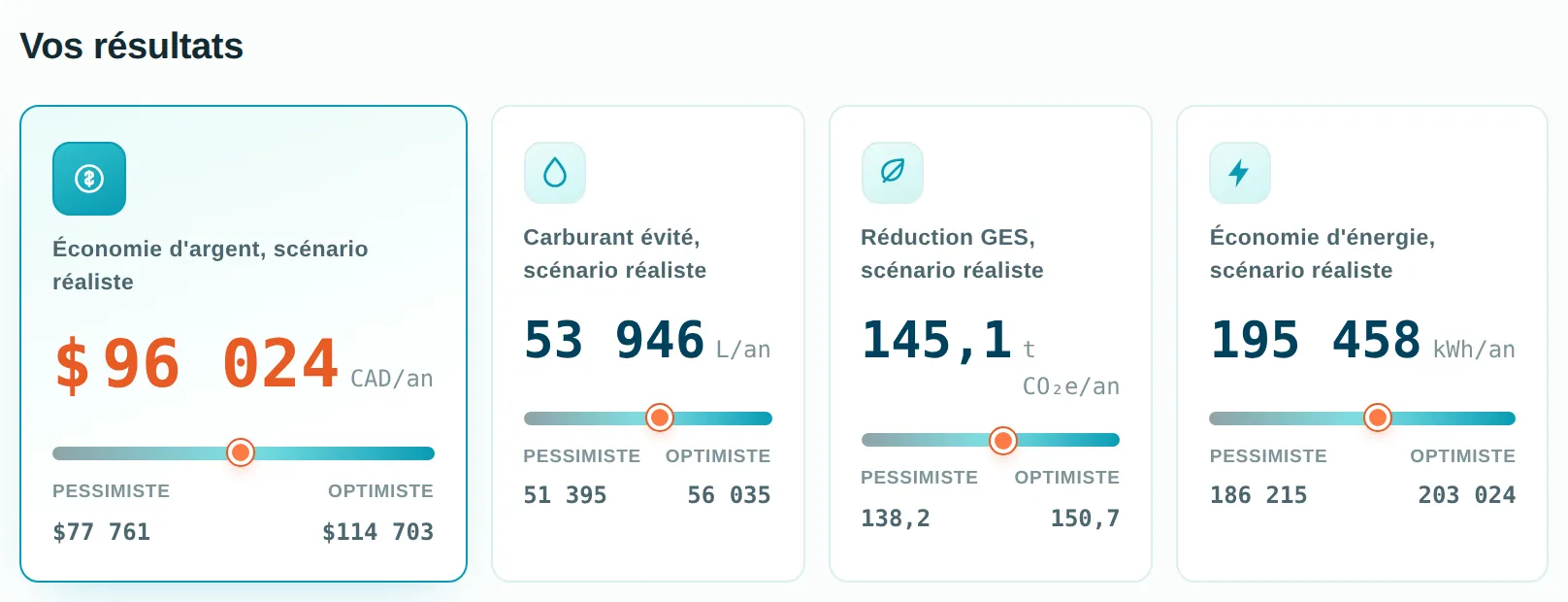
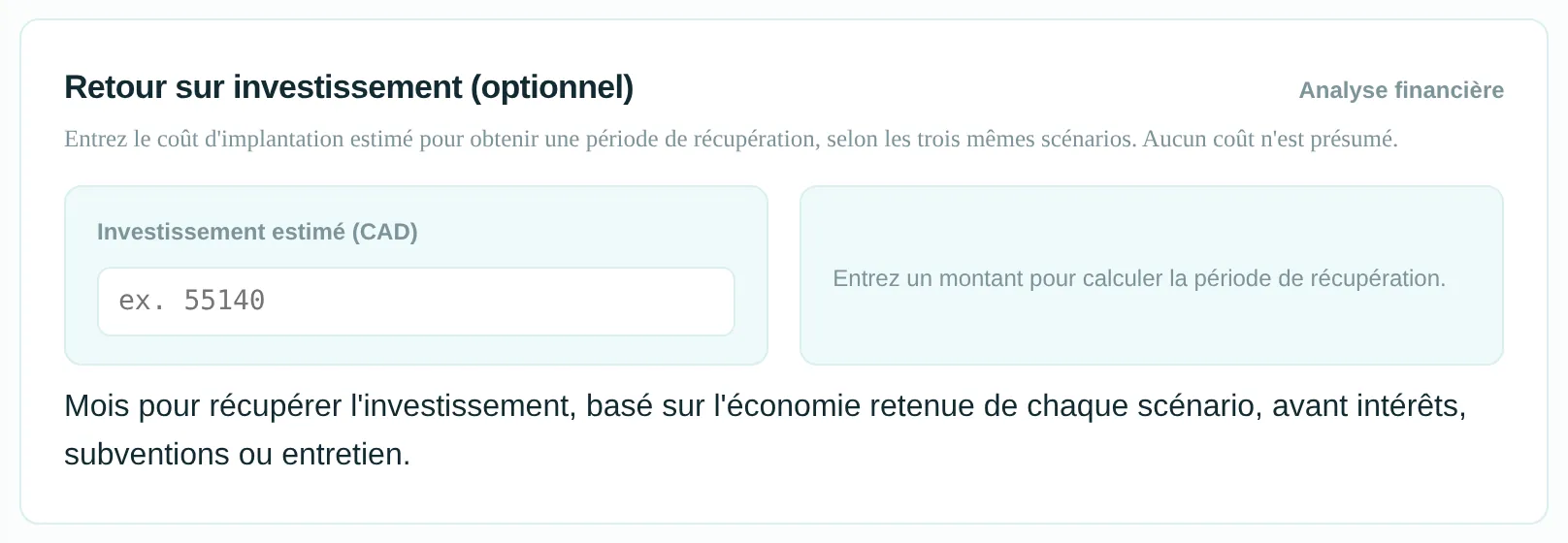
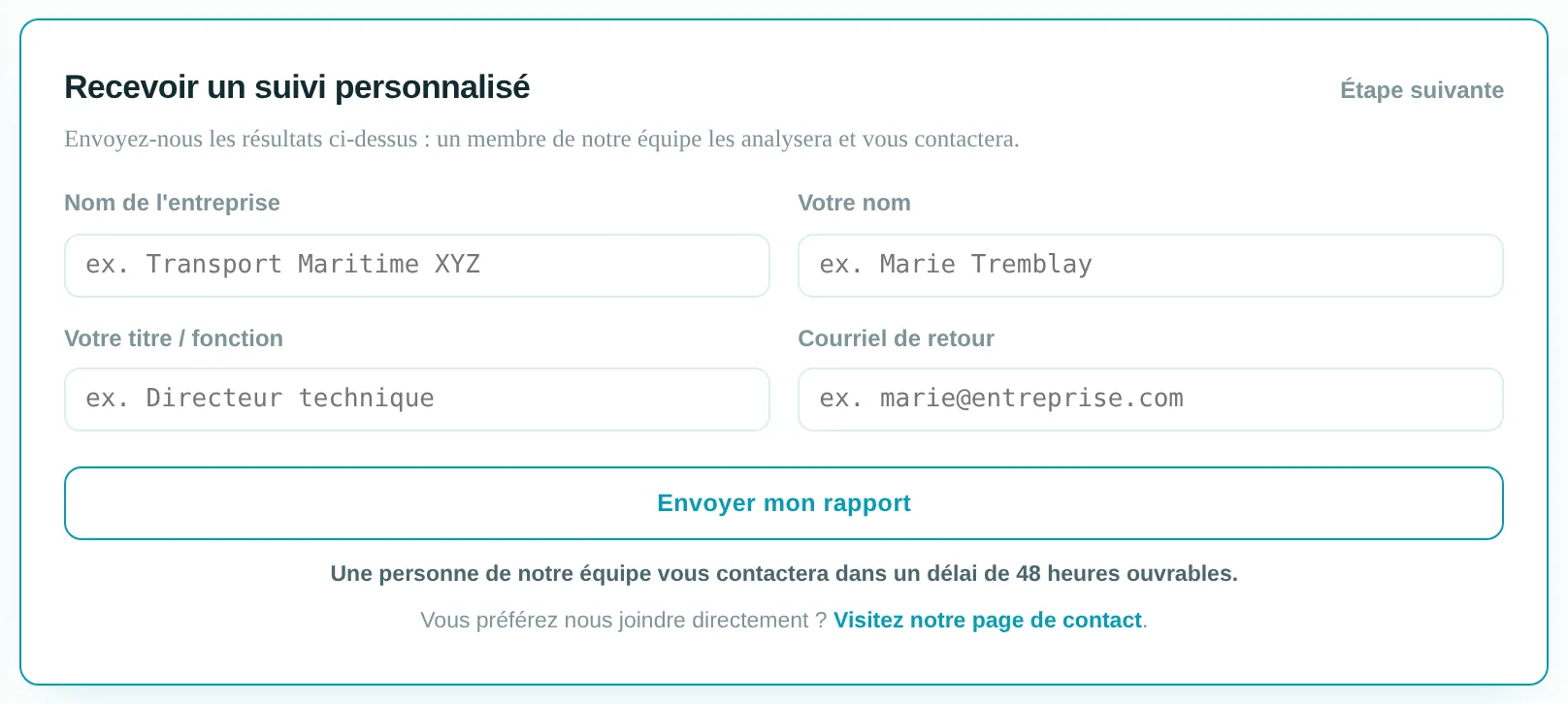
How to use the calculator, in 6 steps
A walkthrough built from real screenshots of the EnerGuard interactive calculator.

See what EnerGuard would change on your vessel
Every vessel has its own pump power and load profile. Use the calculator for a first estimate, or talk to our team.